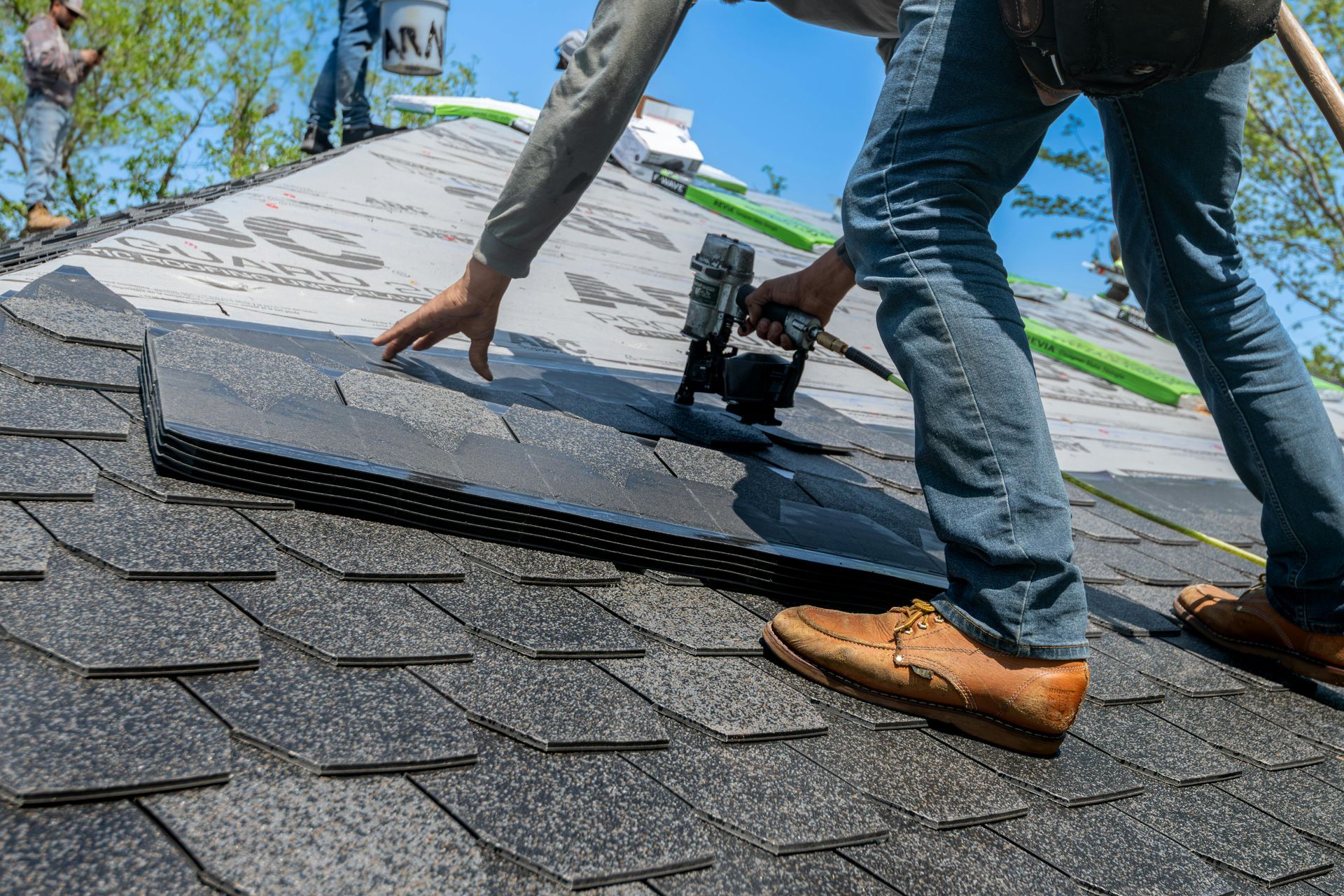
Post-Storm Roof Inspections: What Every Homeowner Needs to Know
When a severe storm rolls through Central Texas, most homeowners step outside to check the fence, the gutters, or the landscaping. But the most important inspection isn’t at eye level. It’s overhead.
Your roof takes the full force of hail, wind, and driving rain. And just because it “looks fine” from the driveway doesn’t mean it is.
A professional post-storm roof inspection is one of the smartest steps you can take to protect your home, your finances, and your insurance coverage.
Why You Should Never Assume “No Leaks = No Damage”
One of the biggest misconceptions homeowners have is that roof damage immediately causes leaks. In reality, hail and wind damage often weaken shingles without creating visible water intrusion right away.
Hail can bruise the matting beneath asphalt shingles, dislodging protective granules and shortening the roof’s lifespan. Wind can lift shingles just enough to break the seal strip — even if they settle back into place afterward.
The result? Your roof may be compromised months before you ever see a ceiling stain.
By the time a leak appears, decking, insulation, and drywall may already be damaged.
What a Professional Inspection Actually Looks For
At Graduate Contracting, a post-storm inspection goes far beyond a quick glance.
A thorough assessment includes:
- Checking shingles for bruising, granule loss, and impact marks
- Inspecting flashing around chimneys, vents, and valleys
- Evaluating ridge caps and roof penetrations
- Examining gutters and downspouts for shingle granules
- Documenting collateral damage (vents, soft metals, screens)
- Inspecting attic spaces for hidden moisture intrusion
We photograph and document all findings so you have a clear record of your roof’s condition.
This documentation becomes especially important if you decide to file an insurance claim.
Timing Matters More Than You Think
Many homeowners wait months before scheduling an inspection, especially if there’s no immediate leak. But that delay can create problems.
Insurance carriers often have claim deadlines tied to the date of loss. Waiting too long may complicate or limit your coverage. Additionally, prolonged exposure to sun and rain can worsen initial storm damage, giving insurers grounds to argue the issue resulted from wear and tear rather than a single event.
The best practice? Schedule an inspection within days of a significant hail or windstorm, even if everything appears normal.
Avoiding Storm Chasers and High-Pressure Sales
After major storms, out-of-town contractors often flood neighborhoods offering “free roofs” or immediate sign-ups.
A legitimate inspection should feel educational, not aggressive.
Look for a contractor who:
- Provides clear photo documentation
- Explains findings without pressure
- Has established local presence and references
- Understands Texas building codes and insurance processes
- Is willing to meet with your adjuster if needed
A post-storm inspection should empower you with information, not rush you into a decision.
The Insurance Advantage of Early Documentation
Even if you choose not to file a claim immediately, having a professional inspection on record protects you.
It establishes a timeline of your roof’s condition. If damage worsens or leaks develop later, you have proof that the issue originated from a specific storm event.
Without that documentation, homeowners are often left arguing about whether damage was “sudden” or “gradual deterioration.”
That’s a fight you don’t want to have alone.
Peace of Mind Is Worth It
Your roof is your home’s first line of defense. After a storm, uncertainty can linger, especially when damage isn’t obvious.
A professional inspection removes the guesswork.
You’ll know whether your roof is fully intact, needs minor repairs, or qualifies for an insurance claim. More importantly, you’ll avoid small storm damage quietly turning into major structural issues months down the road.
If your neighborhood has experienced recent hail or high winds, now is the time to act. Contact us to perform a proactive inspection today, and can save thousands tomorrow.